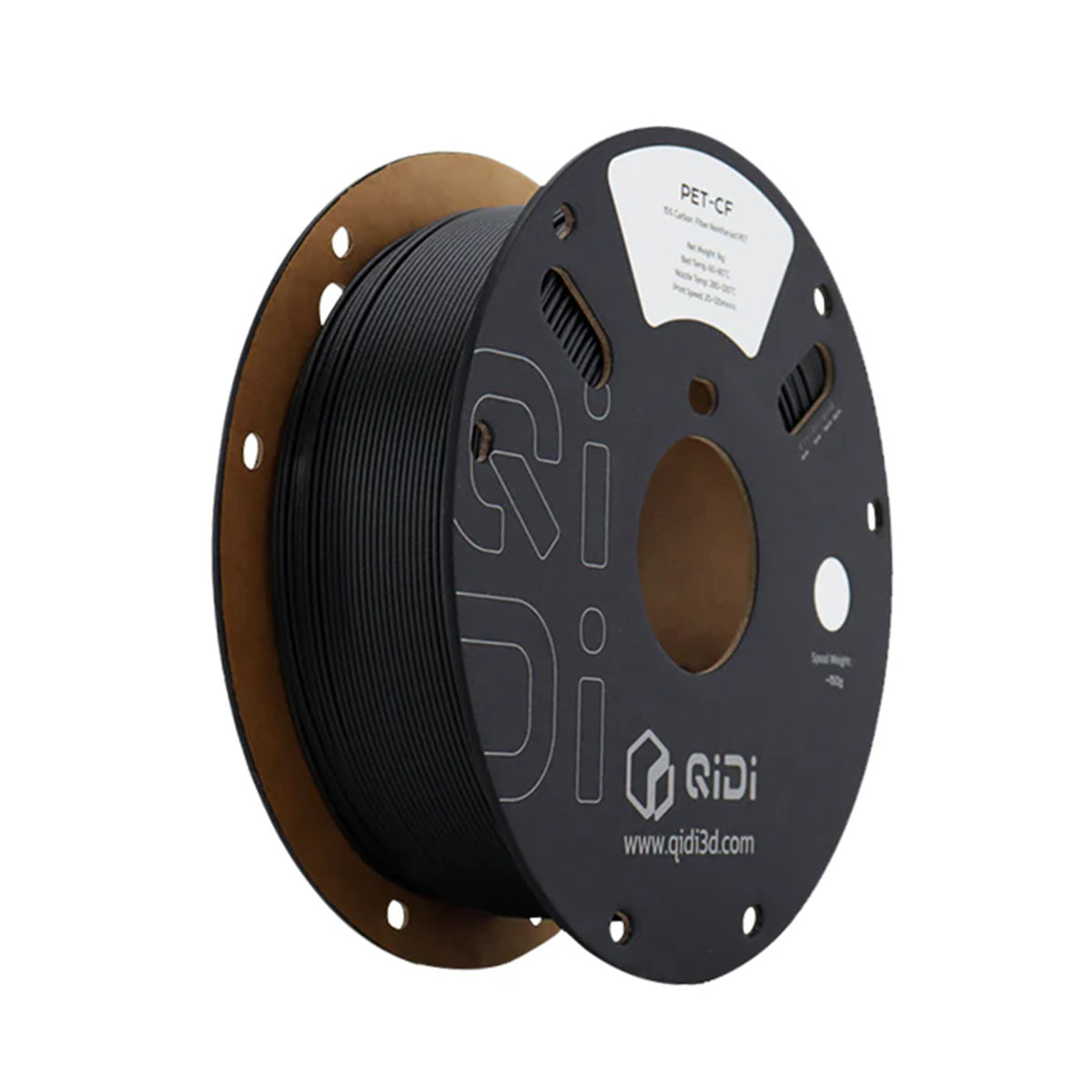
QIDI PET-CF Carbon Fiber Reinforced 3D Printing Filament with high strength, low moisture absorption, 280-320 °C nozzle temperature, and excellent dimensional stability for durable engineering parts. This filament delivers smooth high-speed printing and great surface gloss while providing superior rigidity and thermal resistance compared to standard materials. Makers choose it for functional prototypes and end-use components that need to withstand heat and mechanical stress without warping.
About QIDI PET-CF
QIDI PET-CF brings strong performance to your 3D prints through its smart mix of materials. This filament combines 15 percent chopped carbon fiber with 85 percent PET base to create parts that hold up well under stress. Users get reliable results for demanding projects because the carbon fiber adds extra rigidity and strength without making the material too brittle in normal use.
The physical and thermal qualities make this filament stand out for engineering applications. With a density of 1.3 g/cm³, Vicat softening temperature of 148.8 °C, heat deflection temperature of 86.7 °C, and melting temperature of 251 °C, prints keep their shape even when things get warm. Exceptional thermal resistance and high dimensional stability with low creep mean your finished parts stay accurate and resist deformation over time.
Mechanical properties deliver real durability that everyday users appreciate. Tensile strength reaches 72.51 ±1.39 MPa while bending strength hits 114.47 ±1.89 MPa and bending modulus is 5345.71 ±231.24 MPa with impact strength of 7.75 ±1.08 kJ/m². The breaking elongation rate of 2.49 ±0.22 percent gives enough flexibility for functional items that need to handle loads without snapping easily.
Printing with QIDI PET-CF feels straightforward once you follow the settings. The diameter measures 1.75 mm plus or minus 0.02 mm and works best with nozzle temperatures from 280 to 320 °C, bed at 80 °C with glue, and speeds between 40 and 200 mm/s. Dry the filament at 100 °C for 4 to 8 hours and use hardened steel nozzles of 0.4 mm or larger to enjoy smooth high-speed printing that results in great gloss and a beautiful surface finish.
Very low moisture absorption keeps the material consistent even if storage is not perfect, and it offers excellent wear resistance along with better rigidity than regular PETG. Prints come out without warping, shrinkage, or odor so you spend less time troubleshooting and more time creating strong lightweight parts for vehicle engineering, aerospace concepts, or industrial use.
Specifications
| Parameter | Value |
|---|---|
| Diameter | 1.75 mm ± 0.02 mm |
| Density | 1.3 g/cm³ |
| Vicat Softening Temperature | 148.8 °C |
| Heat Deflection Temperature | 86.7 °C |
| Melting Temperature | 251 °C |
| Melt Index | 6.8 g/10 min |
| Tensile Strength | 72.51 ± 1.39 MPa |
| Bending Strength | 114.47 ± 1.89 MPa |
| Bending Modulus | 5345.71 ± 231.24 MPa |
| Impact Strength | 7.75 ± 1.08 kJ/m² |
| Nozzle Temperature | 280 – 320 °C |
| Bed Temperature | 80 °C |
| Printing Speed | 40 – 200 mm/s |
| Drying Settings | 100 °C for 4-8 h |
| Price | $40 |
Reviews
Printed several functional brackets with this carbon fiber filament and they feel incredibly stiff. The surface came out glossy and smooth without any warping on my larger parts. It handled the heat from my engine bay prototype really well too.
Love how strong the final pieces turned out after using this reinforced filament. No smell during printing and the layers bonded perfectly at the recommended settings. My custom drone arms are lightweight yet tough enough for rough landings now.
The dimensional accuracy on my mechanical parts blew me away with this material. Dried it quickly and the prints held shape even under constant load. Great choice when you need something more rigid than regular options without extra hassle.